Statement of the National Olive Harvest Campaign 2026
Unofficial English translation by the Birzeit Agricultural Committee. The Arabic original is the authoritative text.
Following the arrangements discussed with all partners, and in pursuit of the National Olive Harvest Campaign's goals of protecting farmers and their property and enabling them to harvest their crop, the campaign's Higher Committee has adopted a decentralised approach to managing this season. We therefore call on the heads of local councils and on farmers to take the following measures:
- Form a local committee at town level to manage this olive harvest season, keeping farmers safe and enabling them to harvest their crop.
- The committee, made up of the local council and the town's various bodies, draws up a work plan that includes a programme for border and high-risk areas, so that as many landowners as possible are on their land in these areas at the same time. Farmers must coordinate their plans for these areas with the local council in advance so they can be included in the unified plan.
- The local committee informs farmers of the time and place of gathering, departure and return, and of any special arrangements for reaching land that requires coordination. Farmers in these areas must follow the approved programme and not go alone or outside the announced times, which could put them at risk or disrupt coordination.
- Use local media and the local councils' social media pages to explain how the committee works, publish the approved harvest schedules and dates, and keep in touch in case of emergency.
- Circulate to farmers the phone numbers of the local committee's head and members and the emergency numbers of official institutions, so any incident can be reported immediately, and coordinate directly with Red Crescent and Civil Defence crews so they are ready to respond.
- Neighbouring local councils whose land lies in shared border and high-risk areas coordinate to prepare a joint work and harvest programme for these areas.
- The local committee handles communication and coordination with the General Authority of Civil Affairs and military liaison for areas that require prior coordination, and intervenes and reports immediately in case of any attack or friction by occupation forces and settlers.
- The local committee and local council, together with the Agriculture Directorate and the relevant authorities, survey and classify land into: areas that can be reached normally; border or high-risk areas; areas behind the Wall; and areas that require prior coordination, and inform landowners in advance of the arrangements for each area.
- If a road or gate is closed, opens late, farmers are prevented from reaching their land, or coordination is cancelled, farmers must not take unsafe alternative routes. They should contact the local committee coordinator immediately, who documents the case, refers it to the relevant authorities and follows it up according to the approved procedures.
- For high-risk areas, the local committee sets known gathering, departure and return points for farmers and volunteers, alternative routes where needed, and a clear procedure for injuries and medical emergencies, in coordination with the Red Crescent, Civil Defence and the relevant authorities.
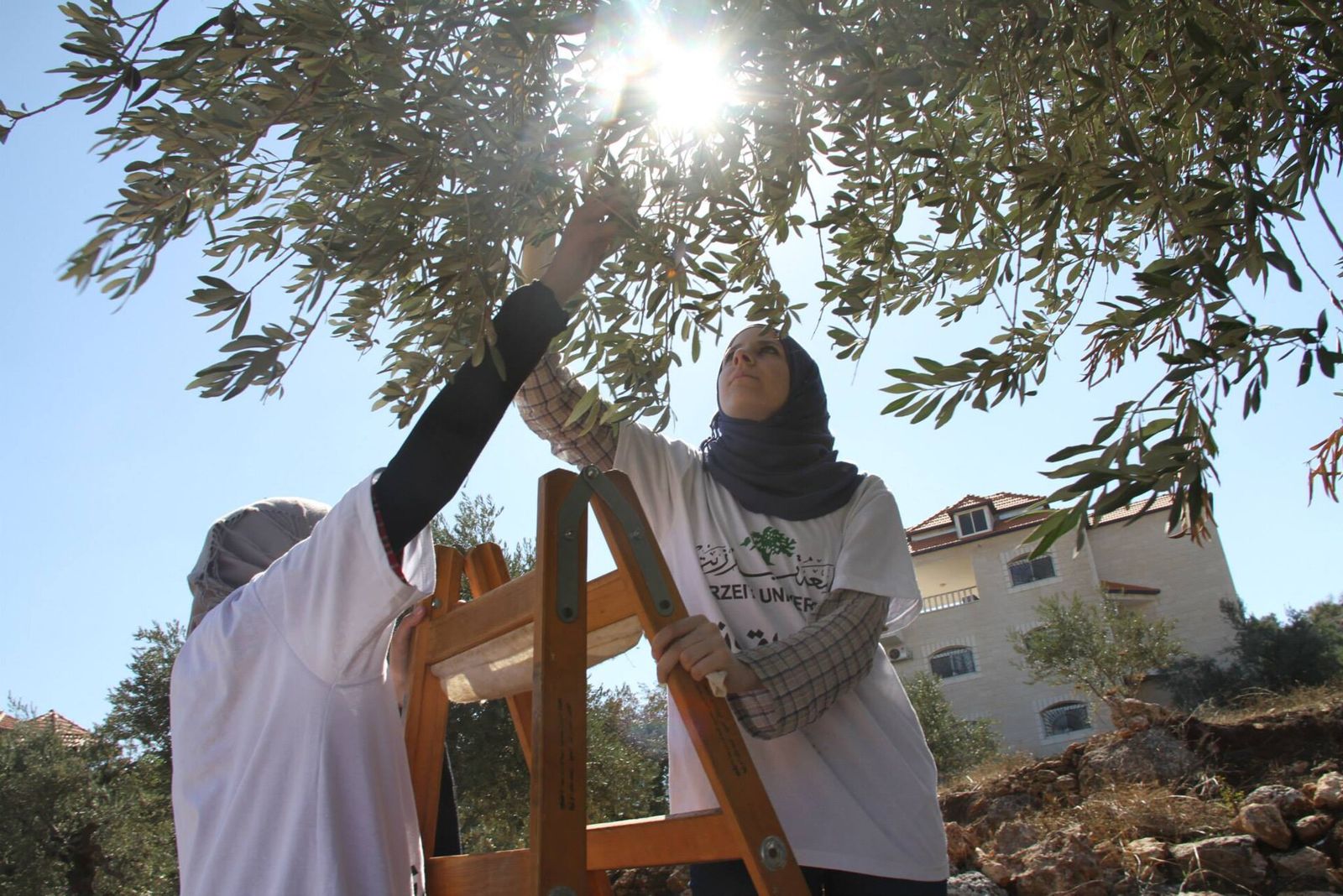
- Form volunteer teams of university students and young people to help with the harvest, and contact the Red Crescent and Civil Defence to involve their volunteers alongside farmers according to the approved programme.
- Raise the readiness of local councils and committees to deal with all emergencies, stressing the importance of documenting any attacks with photos and video in a safe way that does not put lives at risk, and filing an official complaint at the nearest Palestinian police station.
- Move the fruit from the fields to a safe place as you go, and do not pile up large quantities on the land, to avoid theft by settlers or confiscation by occupation forces.
- During the harvest, local committees send regular updates to the governorate committee and the Agriculture Directorate on progress, areas reached and not reached, incidents and urgent needs, so the Higher Committee can act quickly.
- Use modern equipment (electric olive harvesters), which speed up the harvest considerably, especially in border and high-risk areas.
- Volunteers and people in solidarity should give farmers real help and avoid adding any burden or cost for the farmer.
- Lighting fires in olive groves during the harvest is strictly forbidden, to avoid starting wildfires and to reduce pressure on Civil Defence crews in these exceptional circumstances.
Eng. Samir Samara / Ministry of Agriculture Head of the Higher Committee for the 2026 Olive Harvest